Are you drawn to the clean lines of a classic Palm Springs showpiece, or does a newer luxury home with modern systems feel like the smarter move? In Palm Springs, that choice is about more than taste alone. You also need to weigh design authenticity, desert performance, maintenance, and resale fit. If you are deciding between mid-century and new-build luxury homes, this guide will help you compare both with more confidence. Let’s dive in.
Why this choice matters in Palm Springs
Palm Springs is not just another luxury market. It is a design-driven city with a strong architectural identity, and the city’s planning framework reinforces development that fits its scale, character, and desert setting.
That matters because your home choice here often reflects both lifestyle and design philosophy. In Palm Springs, buyers are not simply choosing square footage or finishes. They are often choosing between architectural authenticity and contemporary convenience.
What defines a Palm Springs mid-century home
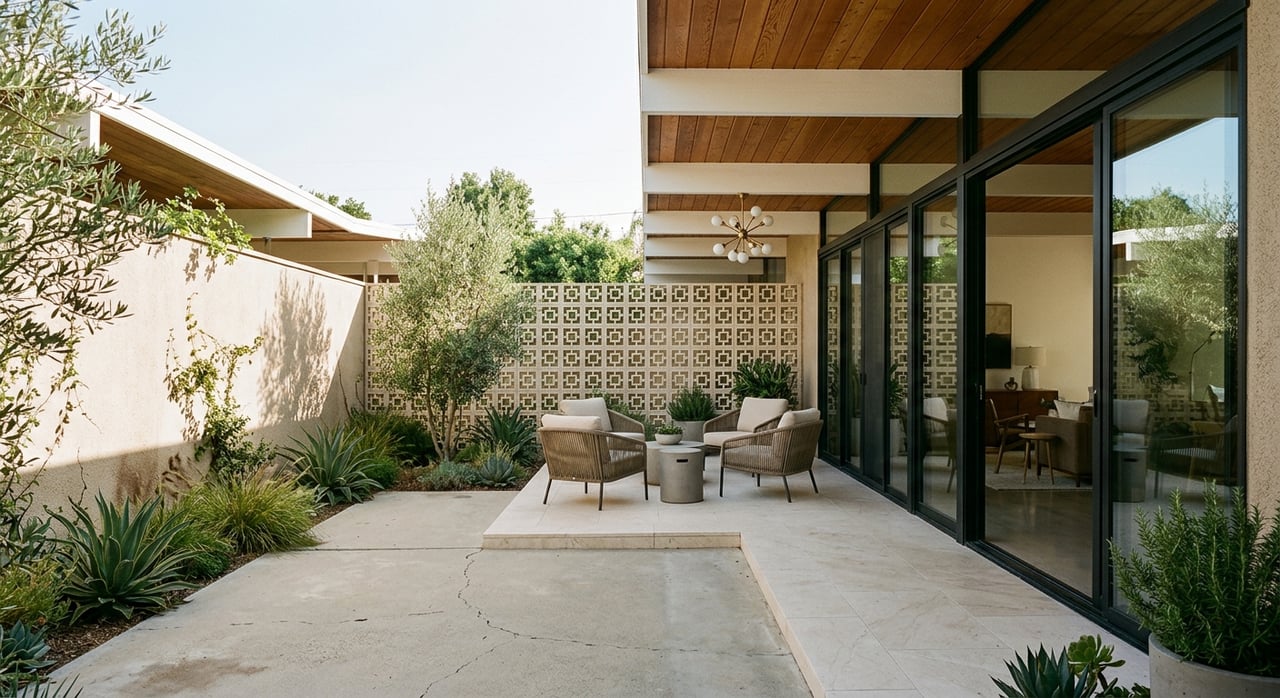
Classic Palm Springs mid-century homes are closely tied to the city’s modernist legacy. The city’s historic context describes common features such as post-and-beam construction, large expanses of glass, open layouts, flat or low-pitched roofs, clerestory windows, and design elements that help manage sun and airflow.
These homes often deliver the look many buyers picture when they think of Palm Springs. You see strong horizontal lines, a seamless indoor-outdoor feel, and an architectural language that feels connected to the city’s history.
Why buyers love mid-century homes
For many buyers, the appeal starts with authenticity. A well-preserved mid-century home can feel like a direct expression of Palm Springs itself, especially in neighborhoods known for classic modern architecture.
These homes also tend to offer character that is difficult to replicate exactly. Details like original post-and-beam structure, atriums, clerestory windows, and carefully restored period elements can create a sense of place that newer homes often reference but do not fully duplicate.
What to watch with mid-century ownership
The beauty of an older home comes with extra diligence. Many classic Palm Springs homes were built before 1978, which means lead-based paint can be a real consideration unless testing shows otherwise.
Asbestos may also be present in some older materials, especially if you plan to remodel or make major repairs. If renovations could disturb older flooring, ceiling materials, or pipe wrap, professional sampling becomes an important step.
Historic status can add another layer. If a home is designated historic or sits within a historic district, city preservation rules and district guidelines may affect what changes you can make.
What defines a Palm Springs new-build luxury home
New construction in Palm Springs is not designed in a vacuum. The city says new homes should be compatible with the area’s character and natural surroundings, use materials suited to the desert climate, and maintain high design quality.
That is why many new luxury homes here still feel connected to the local design vocabulary. Even when the style is more contemporary, newer homes often borrow from the low-slung, indoor-outdoor sensibility that Palm Springs buyers expect.
What buyers get with new builds
New-build luxury homes often focus on easy living. Current listings commonly highlight single-story or highly livable floor plans, open great rooms, large kitchen islands, generous primary suites, offices or flex rooms, and strong connections to pools, patios, and mountain-view outdoor spaces.
Many also emphasize comfort-focused materials and systems. Features such as high-density insulation, sound-attenuated walls, climate-conscious glazing, polished concrete floors, smooth stucco exteriors, and climate-controlled garages are often part of the value proposition.
Why buyers choose new construction
If you want a more turnkey experience, new construction can be appealing. Many buyers prefer newer systems and fewer immediate renovation decisions, especially in a climate where cooling performance and building efficiency matter every day.
That does not mean every new build is automatically the better fit. It means the tradeoff is different. Instead of focusing on legacy materials and preservation constraints, you are often evaluating workmanship, finish quality, and whether the delivered home matches the plan and expectations.
Desert climate changes the equation
Palm Springs heat is not a minor detail. NOAA climate normals for Palm Springs Regional Airport show average daily highs of 103.6°F in June, 108.6°F in July, and 108.1°F in August, with only 4.61 inches of annual precipitation.
In practical terms, that makes building performance a major ownership issue. Whether you buy a mid-century original or a recent new build, you should pay close attention to roof condition, shade strategy, glazing, HVAC capacity, and overall cooling efficiency.
Roofs, glass, and cooling matter
The desert places real stress on materials. The U.S. Department of Energy says conventional roofs can reach 150°F or more on sunny summer afternoons, while reflective cool roofs can stay more than 50°F cooler under the same conditions.
For you as a buyer, that means design should never be separated from performance. A stunning roofline or dramatic wall of glass may be part of the appeal, but the quality of the roof assembly, window seals, shading, and HVAC support can shape your comfort and long-term costs.
How to compare lifestyle fit
The right choice often comes down to how you want to live in the home. Both mid-century and new-build luxury homes can work beautifully in Palm Springs, but they often serve slightly different priorities.
Here is a simple way to frame the decision:
| If you prioritize | Mid-century may fit better | New-build may fit better |
|---|---|---|
| Architectural pedigree | Yes | Sometimes, often as reinterpretation |
| Turnkey convenience | Sometimes | Often |
| Period character | Strongly | Limited or inspired by it |
| Newer systems | Varies | Usually |
| Flex rooms and office space | Varies | Often |
| Preservation obligations | Possible | Less likely |
| Renovation tolerance | Often needed | Usually lower |
Mid-century may be right for you if
- You want an authentic Palm Springs architectural experience
- You value original design details and historical character
- You are comfortable with more careful due diligence
- You understand that preservation rules may affect future changes
New-build may be right for you if
- You want a more turnkey luxury home
- You prioritize newer materials and systems
- You prefer contemporary layouts with flex space and larger suites
- You want Palm Springs style with fewer older-home unknowns
Inspections matter in both categories
No matter which direction you lean, inspections are essential. HUD notes that a home inspection is meant to inform you about a property’s condition before you make a financial commitment.
For a mid-century home, that conversation should include roof condition, HVAC performance, window integrity, deferred maintenance, and whether lead or asbestos testing makes sense based on the age of the home and your renovation plans. For a new build, the focus often shifts to workmanship, system performance, finish quality, and confirming that the completed home matches what you expected.
What resale can look like in Palm Springs
Palm Springs is currently a balanced market, not an extreme seller’s market. Realtor.com reports a May 2026 median listing price of $699,000 citywide and a median of 61 days on market.
In the luxury segment, demand patterns vary by product and neighborhood. Deepwell Estates, a classic mid-century area, shows a median listing price of $1.7745 million and 34 days on market, while Escena, known for newer luxury homes, shows a median listing price of $1.2745 million and 48 days on market.
The key takeaway is simple. Age alone does not determine resale strength. Homes tend to perform best when they combine strong location, clear design identity, good upkeep, and a lifestyle match that resonates with buyers.
How to make the smarter choice
If you are choosing between mid-century and new-build luxury homes in Palm Springs, start with your real priorities instead of the label. Ask yourself whether you want architectural authenticity, lower renovation risk, a more flexible floor plan, or a home that feels iconic from day one.
Then evaluate the property through a Palm Springs lens. In this market, style matters, but desert durability matters too. The best purchase is usually the one that aligns design, condition, comfort, and your long-term plans.
If you want a private, informed look at Palm Springs luxury options, Craig Chorpenning can help you compare architectural character, property condition, and market positioning so you can move forward with confidence.
FAQs
What is the main difference between mid-century and new-build luxury homes in Palm Springs?
- Mid-century homes usually offer stronger architectural authenticity and historic character, while new-build homes more often offer newer systems, contemporary layouts, and a more turnkey experience.
Are Palm Springs mid-century homes harder to maintain?
- They can require more diligence because many were built before 1978 and may involve older materials, deferred maintenance, or preservation-related limits on future changes.
Do new-build homes in Palm Springs still reflect local design style?
- Yes. New construction in Palm Springs often draws from the city’s established design language, even when the homes are more contemporary in layout and finishes.
Why does climate matter so much when buying a Palm Springs home?
- Palm Springs experiences extreme summer heat, so roof performance, shade, glazing, and HVAC capacity can have a major impact on comfort, maintenance, and day-to-day living.
Is a mid-century or new-build home better for resale in Palm Springs?
- Neither category wins automatically. In Palm Springs, resale strength usually depends more on location, design identity, condition, and lifestyle appeal than on age alone.