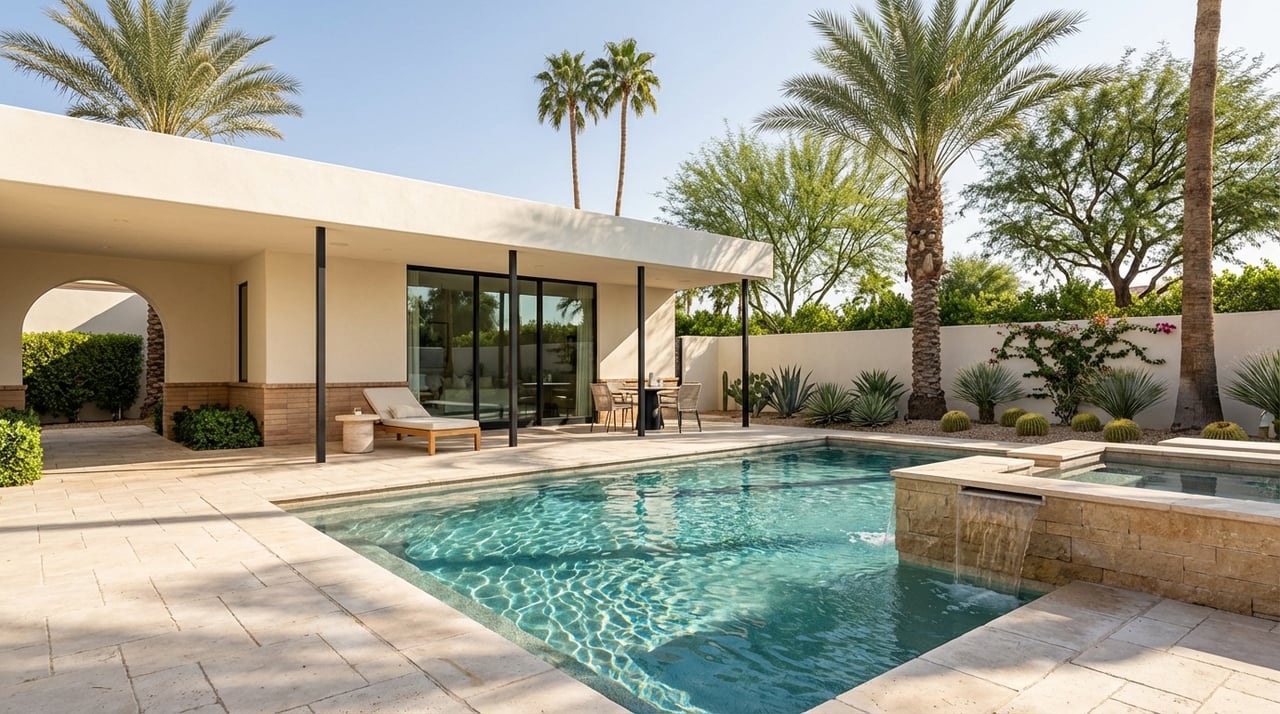
Picture your morning starting with mountain views, a swim in a sparkling pool, and a tee time you booked yesterday. In Rancho Mirage, that is not just a vacation. It can be your everyday. Whether you are shopping for a second home or planning a full‑time move, you want clarity on how resort‑style living actually works here, what it costs, and how to choose the right community. This guide breaks down the amenities, community types, access rules, and lifestyle touchpoints that define Rancho Mirage. Let’s dive in.
What resort living means here
Resort‑style living in Rancho Mirage blends spa and wellness, multiple pools and cabanas, golf and racquet sports, premium dining and entertainment, and 24/7 gated security across many neighborhoods. Hotels and resort residences deliver hospitality‑run amenities, like the hilltop spa experience at The Ritz‑Carlton Spa, Rancho Mirage. Families often look for water‑park features and casual dining, which you will find at Omni Rancho Las Palmas’ Splashtopia. Golf‑centric buyers prioritize championship courses and private club programming, with historic clubs and multi‑course complexes nearby.
Hospitality venues, private country clubs, and guard‑gated HOA communities each deliver this lifestyle a little differently. Some amenities are open to the public for a fee, while others require a club membership or are included within your HOA.
Why Rancho Mirage stands out
Rancho Mirage is a small desert city with an estimated population of 18,001, which supports a high concentration of gated, club, and resort communities compared with larger Coachella Valley neighbors. You can verify the latest figure from U.S. Census QuickFacts. That intimate scale helps keep daily life calm, even when visitor season picks up across the valley.
You also have year‑round lifestyle anchors close at hand. The Agua Caliente Casino Resort Spa brings gaming, a spa, and a full entertainment schedule. The Sunnylands Center & Gardens offers tours, programs, and an iconic estate setting. For healthcare access, the Rancho Mirage campus of Eisenhower Health is a major regional resource. Daily errands and dining are simple at The River at Rancho Mirage, a central hub with restaurants, shops, and entertainment. When you need to fly, Palm Springs International Airport is roughly 8 to 10 miles away, about 15 to 20 minutes by car, according to Travelmath’s drive‑time estimate.
Community types and how they live
Full‑service resorts and resort residences
What you get: multiple pools, on‑site restaurants, paid spa services, event calendars, valet and concierge support. You live close to the action and can often access day‑use amenities through guest programs or resident packages. Examples include the Ritz‑Carlton, Agua Caliente, and Omni Rancho Las Palmas.
Who it fits: You value flexibility, love hospitality programming, and want to entertain visiting friends with easy, on‑property options.
Private country‑club enclaves
What you get: championship golf, tennis and pickleball complexes, member dining, and full social calendars. Membership models vary, from equity to non‑equity structures, with separate initiation and dues. A landmark example is Mission Hills Country Club, with multiple courses and a notable tournament history.
Who it fits: You prioritize golf access, coaching and clinics, and a built‑in social network of fellow members.
Guard‑gated HOA and residential club communities
What you get: neighborhood pools, fitness centers, tennis and pickleball, community clubhouses, and social programming. Some purchases include social or limited‑golf privileges; others require a separate buy‑in. Well‑known examples include Sunrise Country Club and Rancho Las Palmas Country Club.
Who it fits: You want low‑maintenance living, neighborhood amenities, and an HOA structure that simplifies upkeep when you travel.
High‑rise lake and waterfront settings
What you get: a unique resort feel with water features, views, and concierge‑style services in a compact community. Desert Island, a high‑rise condominium community set on an island lake, is a distinctive option offering 24‑hour guarded access and a private course.
Who it fits: You prefer lock‑and‑leave convenience with dramatic outlooks and a managed building experience.
Historic estates and exclusive enclaves
What you get: larger lots, privacy, and proximity to institutionally significant properties like Sunnylands. These enclaves helped shape the region’s “Playground of Presidents” reputation and remain among the valley’s most private addresses.
Who it fits: You want space, architectural variety, and a discreet setting for entertaining.
Access, memberships, and the fine print
Not all amenities are included with a home purchase. Public hospitality perks, like spa treatments or pool days, are usually pay‑to‑play. Private clubs require membership for full access. Some HOAs bundle social or limited golf access into ownership, while others do not. Always ask whether your purchase includes any club privileges or if access is optional through a separate agreement.
Expect multiple cost streams. HOA dues, club initiation and monthly dues, special assessments, and property taxes all factor into your holding costs. Budgets vary by community. During due diligence, request the current HOA budget, reserve study if available, and the club’s most recent dues schedule.
Short‑term rentals are a special case in Rancho Mirage. The city prohibits rentals of 27 days or fewer. Advertising or operating a short‑term rental is a code violation. Review the municipal code for details and current enforcement practices at the city’s site, starting with the short‑term rental ordinance reference. If you plan any rental activity, align your plans with the code and your HOA’s rules.
Second‑home vs full‑time living
Second‑home owners often value ease. Resort hotels and guard‑gated HOAs make life simple when you are away, thanks to onsite staff, security, and common‑area maintenance. Proximity to PSP is a plus if you fly in for weekends or seasonal stays.
Full‑time residents tend to watch operating budgets, year‑round community programming, and access to everyday services. The presence of Eisenhower Health’s regional campus is a meaningful benefit for many buyers. Whichever profile you fit, your day‑to‑day rhythm can feel like a vacation, just with the structure and support you need year‑round.
A quick lifestyle checklist
Use this to narrow your search:
- Golf priority: championship access, practice facilities, lessons, and league play.
- Water features: resort pools, lap pools, splash zones, and spa programs.
- Fitness and racquets: tennis and pickleball courts, fitness centers, and classes.
- Dining and entertainment: on‑property restaurants, casino shows, and nearby center options like The River at Rancho Mirage.
- Privacy and security: guard‑gated entries, patrols, and guest policies.
- Convenience: airport access via Palm Springs International Airport, healthcare at Eisenhower Health, and everyday retail.
- Ownership costs: HOA dues, any club initiation and monthly dues, and assessments.
- Rental plans: compliance with the city’s short‑term rental rules.
Sample shortlists to explore
- Golf and club life: Mission Hills Country Club, Tamarisk, Thunderbird, The Club at Morningside.
- Family‑friendly resort energy: Omni Rancho Las Palmas area and adjacent residential options.
- Lock‑and‑leave simplicity: high‑rise and lake settings like Desert Island.
- Privacy and prestige: custom estates in historic enclaves near Sunnylands.
These communities each have distinct membership models and HOA structures. Compare the fine print side by side to align with your budget and lifestyle.
How to evaluate a property fast
- Confirm what is included. Ask whether social or golf memberships convey with the purchase or require a separate initiation.
- Map your daily life. List your top five touchpoints, such as pools, golf, clinics, spa, dining, and event access, and verify that each is on‑site or nearby.
- Review rules and policies. Check HOA bylaws, guest and vendor policies, pet rules, and any planned capital projects.
- Model real holding costs. Estimate HOA dues, club dues, utilities, property taxes, and reserves for assessments.
- Stress‑test travel plans. Time your route to PSP and essential services during peak season.
Ready to make resort life yours?
Finding the right fit in Rancho Mirage is about more than beds and baths. It is about the cadence of your days, the amenities you will actually use, and how ownership terms align with your plans. If you want a discreet, high‑touch guide to curate options and negotiate with confidence, reach out to Craig Chorpenning for a private consultation or a video‑led tour of communities that match your lifestyle.
FAQs
What does “resort‑style living” in Rancho Mirage include?
- Spa and wellness options, multiple pools and cabanas, golf and racquet sports, onsite dining and entertainment, and security‑forward gated communities, often delivered by hotels, private clubs, and HOA neighborhoods.
How far is the airport from Rancho Mirage?
- Palm Springs International Airport is roughly 8 to 10 miles away, about 15 to 20 minutes by car, based on Travelmath’s estimate.
Are short‑term rentals allowed in Rancho Mirage?
- No. The city prohibits rentals of 27 days or fewer. Review the municipal code and your HOA’s rules, starting with the city’s short‑term rental ordinance reference.
Do homes in club communities include memberships?
- Sometimes. Some purchases include social or limited‑golf access, while others require a separate initiation and monthly dues. Ask for the purchase contract and the club’s current membership terms during due diligence.
What are standout amenities families often seek?
- Pools with activity zones and on‑site dining are common priorities, with examples like Splashtopia at Omni Rancho Las Palmas illustrating the family‑forward resort experience.
Which clubs are notable for golfers?
- Multi‑course private clubs with active member programming are a strong draw, including well‑known options like Mission Hills Country Club.