Thinking about adding solar at Bighorn but worried the HOA will say no? You are not alone. Many owners want lower energy costs and backup power, yet they are unsure how state law and community standards fit together. This guide shows you how California’s solar rights work, what Bighorn’s review typically looks like, and the practical steps to get approved without surprises. Let’s dive in.
What Civil Code 714 means for you
California’s Solar Rights laws, commonly referenced as Civil Code 714 and related provisions, protect your right to install a solar energy system at your home. An HOA cannot impose an outright ban in most cases. The association may apply reasonable restrictions that focus on placement, appearance, or safety.
A restriction is considered reasonable when it does not significantly increase the system’s cost or reduce its performance. For example, color-matched racking or low-profile mounting can be reasonable if they do not reduce output or add major expense. If a rule conflicts with state law, the statute generally controls.
Your rights typically cover photovoltaic panels, solar water heating, and associated equipment. This includes mounting hardware and inverters. Battery storage often travels with these protections when part of the solar installation, although placement and safety rules can apply.
How Bighorn reviews solar plans
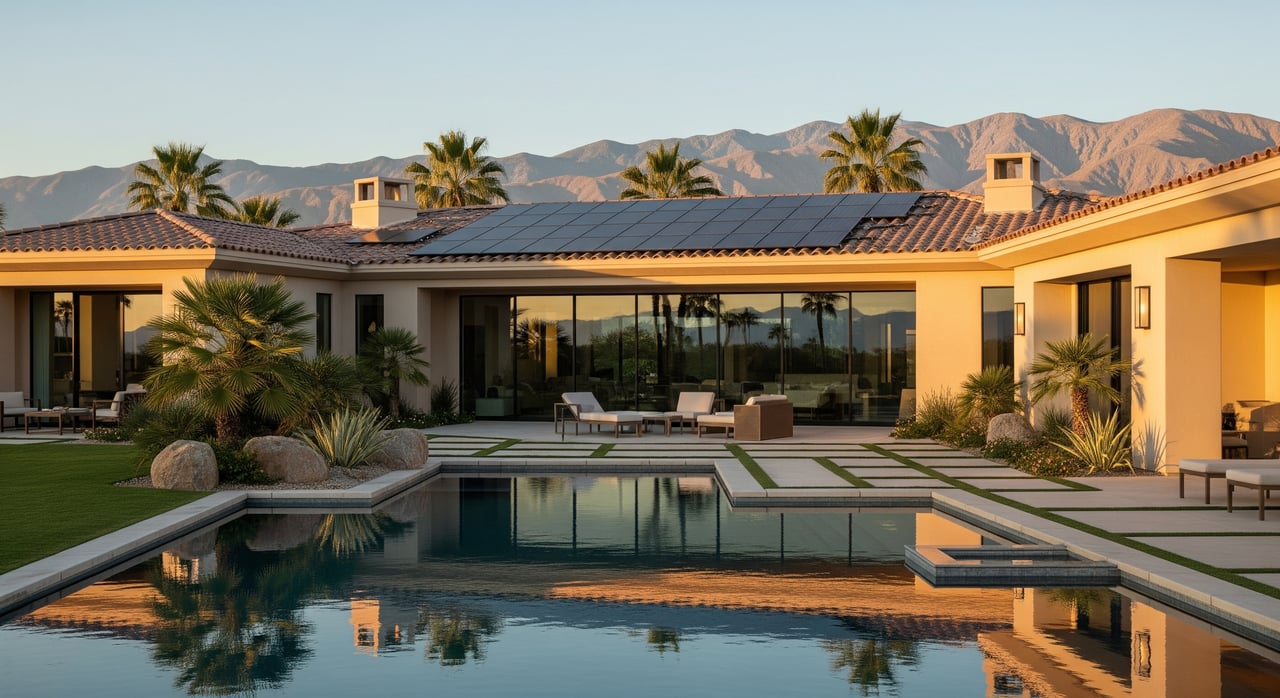
Bighorn is a design-forward, golf-centered community where aesthetics and views carry weight. Expect the Architectural Review Board, often called the ARB, to look closely at visibility from the street, fairways, and key viewpoints. Your best approach is to minimize visibility and demonstrate a thoughtful design.
Common conditions you may see include flush-mount panels, low-profile or color-matched equipment, and conduit that is concealed where practical. Rooftop systems are usually preferred over ground-mounted arrays near common areas. Screening for inverters and battery cabinets is also typical.
Start with your documents and team
Begin with your CC&Rs, Design Guidelines, and ARB application forms. These govern what you submit, when you submit, and how decisions are made. Review them closely so your first submittal is complete.
If you have questions, ask management or ARB staff for a quick pre-application conversation. A short call can surface visibility concerns early. Choose a licensed solar contractor who has experience with HOA projects in Palm Desert and Riverside County.
Step-by-step to approval at Bighorn
Pre-planning
- Read your CC&Rs, Design Guidelines, and ARB forms for your specific lot.
- Confirm your electric utility for interconnection steps. In much of Riverside County, Southern California Edison serves many addresses. Always verify service for your property.
- Photograph your roof planes, the street-facing elevation, and any fairway-facing views. Note shading from trees or nearby structures.
Select your contractor and prepare the packet
- Hire a licensed solar contractor who understands HOA submittals and local permitting.
- Assemble a complete ARB and permit package that typically includes:
- Site and roof plans showing panel layout with orientation.
- Elevation drawings or photo sims showing visibility from the street and golf course.
- Manufacturer spec sheets for panels, racking, inverters, and batteries if included.
- A structural assessment or engineer letter if loads or penetrations are substantial.
- A shading analysis or estimated production figures to show system efficacy.
- Color photos or renderings of the finished appearance.
- Proposed conduit routing and inverter locations with screening notes.
- City of Palm Desert permit application forms for the building department.
- Utility interconnection documentation or confirmation of planned submittal.
Submit to the ARB and communicate proactively
- Follow the ARB’s process and calendar. Incomplete packets are the number one cause of delays.
- Ask for an optional pre-submittal review if available. Early feedback helps you refine placement and screening.
- Offer mitigation up front. Rear roof planes, flush-mount hardware, and color-matched equipment can reduce visual impact.
- Keep written records of all comments and conditions.
Permits and utility interconnection
- Secure building permits through the City of Palm Desert Building and Safety Division. Your contractor should meet structural, electrical, and energy code requirements found in California’s building and Title 24 standards.
- Follow the utility’s interconnection process. Interconnection approval and any export compensation or net-metering rules must be finalized before energization.
- Incentives can change. Review current utility and state guidance during planning.
Installation and final sign-off
- Confirm permits and interconnection approvals are active before work starts.
- Make sure the crew follows your ARB-approved plans, including conduit runs and equipment screening.
- Schedule required inspections with the city or county and complete any HOA final sign-off steps.
Safety, fire, and battery planning
Local fire code influences roof access, panel setbacks, and distances from skylights or chimneys. Your plan reviewer will enforce these standards at plan check and inspection. In wildfire-prone areas, additional clearances or methods may apply.
If you add battery storage, include product listings, ventilation details, and clearances in your ARB package. Fire department input can be required for siting and signage. Your contractor should coordinate these details so the design aligns with code and HOA expectations.
Common HOA conditions you can anticipate
- Panels sited on less visible roof planes where feasible.
- Flush or low-profile mounting that reduces glare and height.
- Conduits routed in attic spaces or along rear elevations when practical.
- Equipment screening for inverters and batteries.
- Ground-mounted arrays limited or restricted near streets and common areas.
- Restoration requirements for roofs and landscapes when systems are removed.
- Proof of insurance or indemnity related to roof penetrations.
Pitfalls to avoid
- Submitting incomplete packets that trigger deferrals or resubmittals.
- Choosing prominent roof planes that face the street or fairway when a less visible option exists.
- Overlooking conduit routing and equipment screening in your visuals.
- Starting installation before permit issuance or utility interconnection approval.
- Omitting structural review for heavier arrays or tile roofs.
If you receive a denial or heavy conditions
Ask the ARB for a written decision with specific reasons. Compare the conditions to California’s solar rights standards and your CC&Rs. If a condition would significantly raise costs or reduce output, request that the board consider alternatives supported by your contractor’s documentation.
Use the HOA’s internal appeal process first. Keep records of all communications and professional opinions. If issues remain unresolved, consult an attorney who focuses on HOA and solar rights to discuss remedies and timelines.
Buying or selling at Bighorn with solar in mind
If you are planning to list, a permitted and well-sited solar system can be a practical feature when it aligns with community standards. Keep documentation handy, including ARB approvals, final permits, and interconnection confirmation. Clear records make buyer diligence straightforward.
If you are buying, review the home’s ARB approvals, permits, and any roof warranties related to penetrations. Verify that the installed system matches the approved plans and that utility interconnection is active. This prevents surprises after closing.
Your next step
A smooth solar project at Bighorn comes down to early planning, a complete ARB packet, and a design that protects views without undermining performance. With the right contractor and clear communication, you can align Civil Code 714 protections with the community’s aesthetics and get to yes.
If you are weighing solar alongside a purchase or sale in Palm Desert, connect with a local advisor who knows the club communities and their review processes. Ready to talk strategy for your property at Bighorn or nearby enclaves? Connect with Unknown Company to request a private consultation or schedule a property tour.
FAQs
What does California Civil Code 714 allow in an HOA community?
- It protects your right to install solar while allowing HOAs to adopt reasonable restrictions that do not significantly increase cost or reduce performance.
Can Bighorn’s HOA stop me from installing solar panels?
- The HOA generally cannot prohibit solar outright. It can apply reasonable aesthetic and placement conditions that do not materially raise costs or reduce output.
What should my Bighorn ARB submission include for solar?
- Provide site and roof plans, elevations or photo sims, equipment specs, a structural review if needed, shading or production estimates, conduit and equipment locations, and proposed screening.
Do I need permits and utility approval in Palm Desert?
- Yes. Most systems require a building permit under California codes, plus utility interconnection approval before energization. Your contractor should manage both.
Are batteries covered by the same solar rights as panels?
- Often yes when the battery is part of the solar installation, though HOAs can apply safety and placement rules. Include battery specs and clearances in your ARB package.
What if the HOA’s conditions make my system far more expensive?
- Ask for the decision in writing, document the cost and performance impact with your contractor, and use the association’s appeal process. If unresolved, consult an attorney experienced in HOA and solar rights.